Our Work
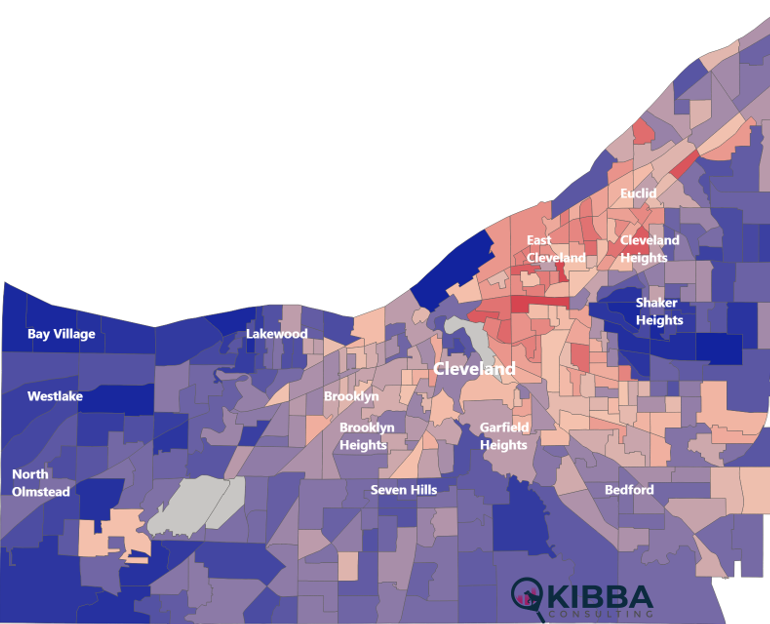
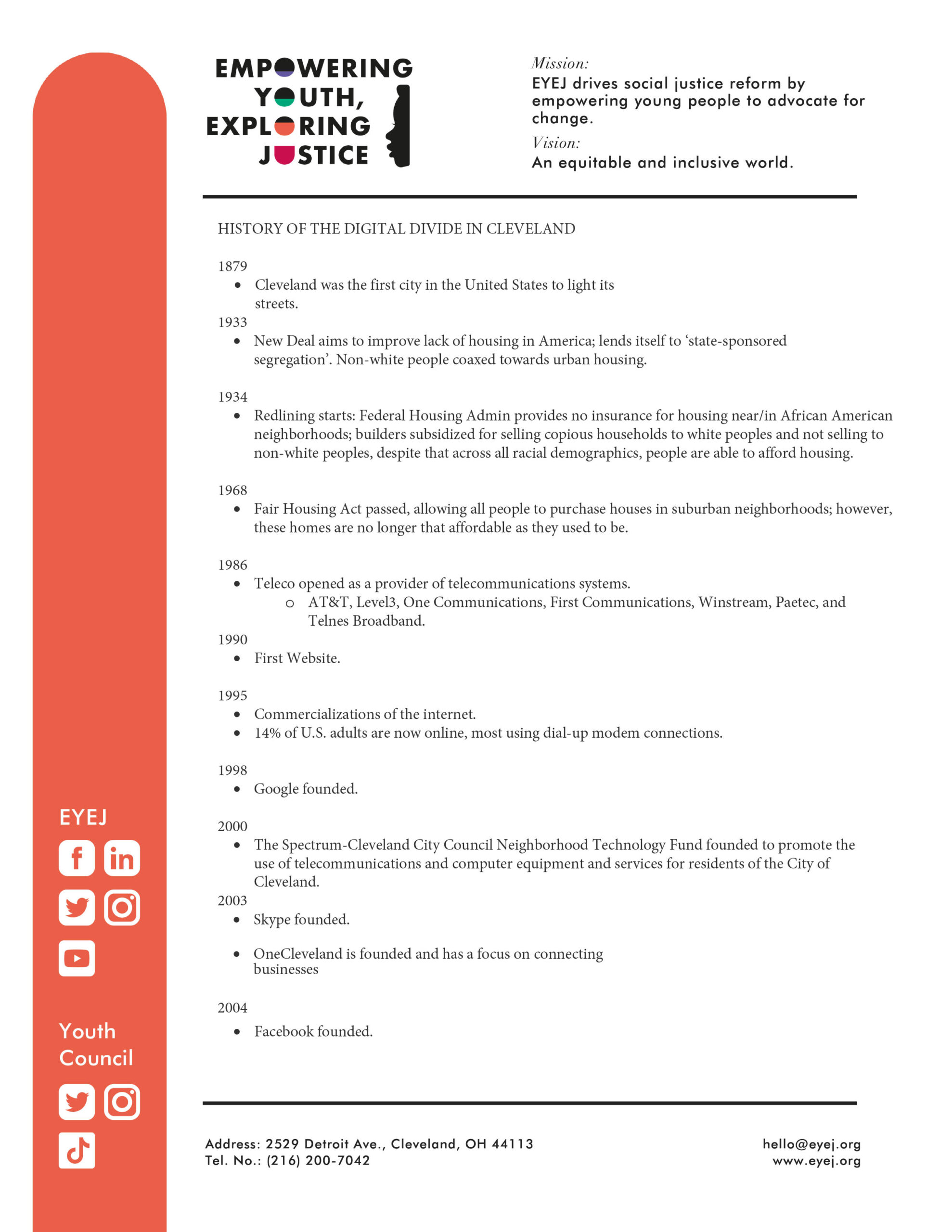
Two decades of broadband in Cleveland, and who got left behind.
The Spectrum-Cleveland City Council Neighborhood Technology Fund founded to promote the use of telecommunications and computer equipment and services for residents of the City of Cleveland.
Skype founded.
OneCleveland is founded and has a focus on connecting businesses.
Facebook founded.

Intel announced that Cleveland and Northeast Ohio is one of its first three pilot Digital Communities around the world as part of an initiative aimed at helping communities use wireless technology and innovative applications to expand and improve services for constituents.
OneCleveland name changed to OneCommunity.
AT&T successfully lobbied state lawmakers to allow it to compete with cable companies, which at the time had exclusive rights for services in cities.
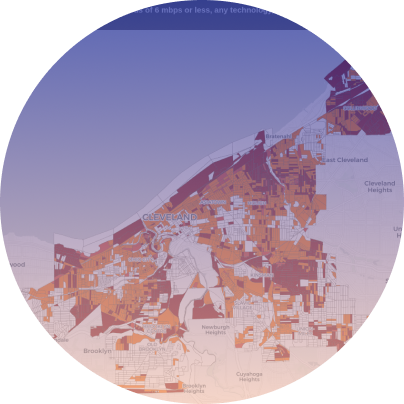
AT&T introduced its new wave of fiber broadband technology, but skipped neighborhoods due to digital redlining. AT&T denies this, saying they invest due to capacity and demand for services.
AT&T has since made additional investments in the city, including adding fiber cables on poles in some of the poorest neighborhoods, but the WiFi still equates to what a wealthy suburban neighborhood would have gotten in 2005 (6 megabits or less).
Federal stimulus funding received to expand the broadband footprint and launch Connect Your Community.
$44.8 million goes to OneCommunity from $118 million in federal stimulus money to Ohio to expand broadband access and to build a fiber optic network that might entice 21st century businesses.
Connect Your Community founded.
Cleveland public libraries start to quadruple the number of computers available and increase WiFi capacity.
Connect Your Community’s 2 year program ended.
Sale of OneCommunity Broadband assets to Everstream.
FCC classified broadband as a telecommunications service in its Open Internet Order.
Sep 2015 – OneCommunity receives $50 million private investment.
DigitalC is incorporated as a new non-profit corporation with a focus on residents.
City Council President Kevin Kelley puts in free WiFi hotspots in Old Brooklyn, connecting 90% of the community.
FCC classified broadband as an information service in its Open Internet Order.
Launch of Connect the Unconnected Initiative.
The city has spent more than $3.2 million through the end of 2016, and anticipates spending about $36 million over the course of the consent decree.
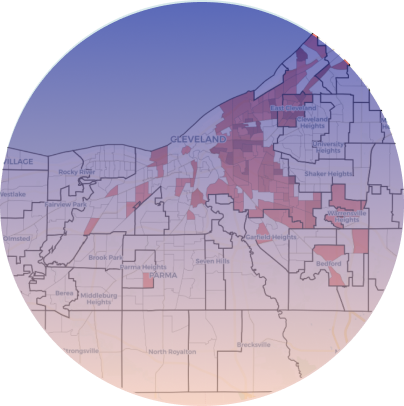
AT&T: Census map shows that low income neighborhoods were denied installation of medium and high speed internet.
113,746 (out of 537,621) households, or 21% of the population in Cuyahoga County, lacked internet access of any type.
About 31% of the entire City of Cleveland also lacked internet access.
Launch of ReStart Program.
DigitalC partners with housing authorities in Cleveland – broadband is sent from antennas placed atop buildings.
DigitalC completed its pilot project called Connect the Unconnected, providing devices and Internet access to over 500 households.
Cleveland is the fourth-worst-connected city in the nation, according to U.S. Census data and a 2018 study.
Cleveland libraries partnered with the Cleveland Foundation and Huntington Bank to purchase 1,000 hotspots available for check out.
ReStart Program report (Survey Results on the Outcome of DigitalC’s Basic Digital Literacy Training Program) is published by Connected Insights.
Cleveland ranks worst BIG city in the United States (drops from #3 slot).
COVID pandemic: CMSD schools and the City of Cleveland close down.
Spectrum offers two months free Internet to students.
August 24 – CMSD schools open for the new school year, but with remote and hybrid learning.
27,000 laptops and tablets and about 13,500 temporary WiFi hotspots from CMSD, for a district with about 40,000 students.
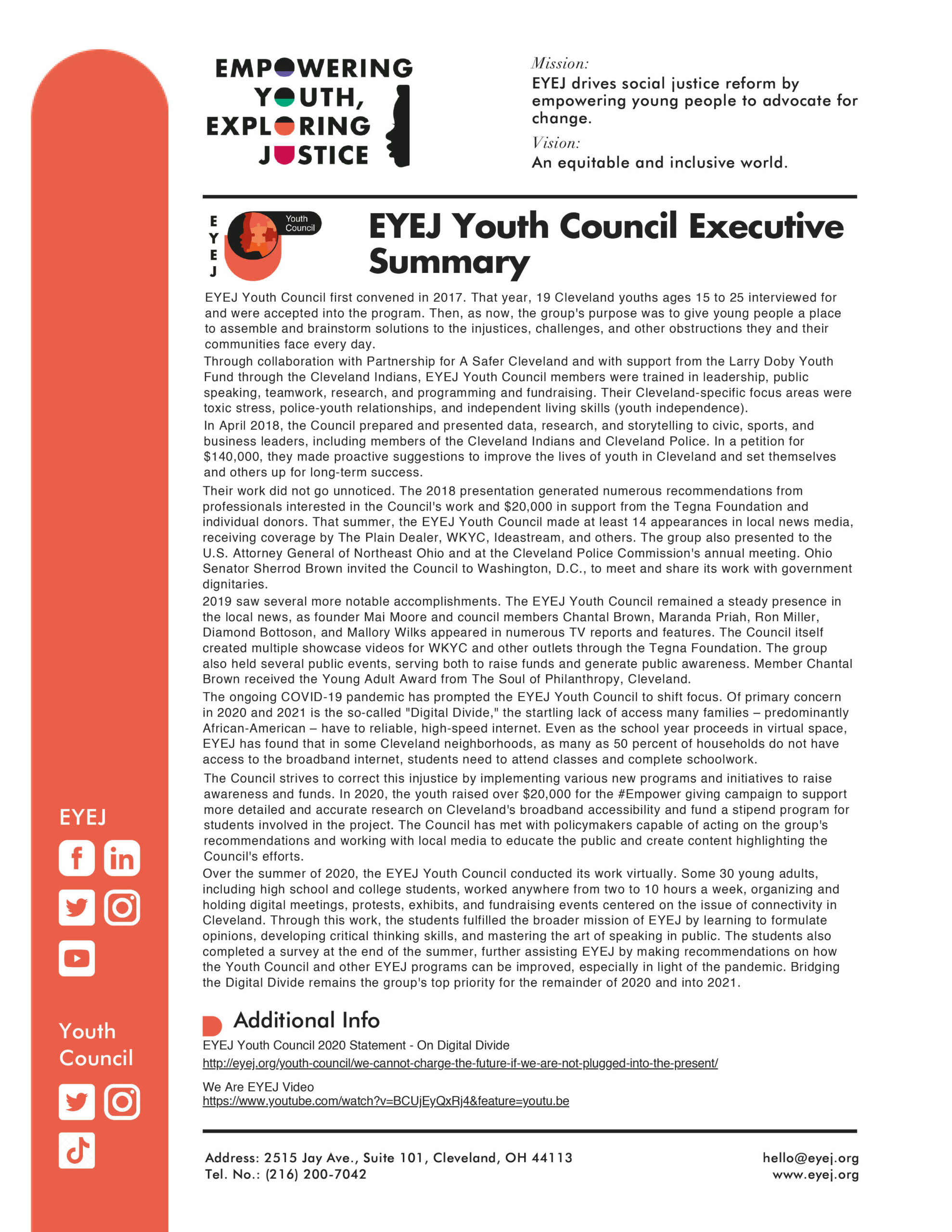
The EYEJ Youth Council’s focus shifted to closing the Digital Divide once COVID-19 and lockdowns began in March 2020, turning the existing problem of digital exclusion into a catastrophe of lost education and opportunity for Cleveland’s most vulnerable. They felt it was imperative to continue to empower youth, given their lack of internet access and Cleveland being named the worst connected big city in the United States.
Through growth in the Council, the group decided to split into two sections: a core group focused on social policy, research, programming, and community organizing, and members focused on youth voice, social media, and merchandise. The impact of their work has been dynamic, from policy work, phone zaps, town halls, and partnering in events, to letter-writing campaigns and developing new digital literacy programming.
The EYEJ Youth Council crafts strong messaging and action steps, showcases the urgency of this issue, and implements solutions to help empower our youth.